
The Grape Escape: Inside Switzerland’s Fall Wine Harvest
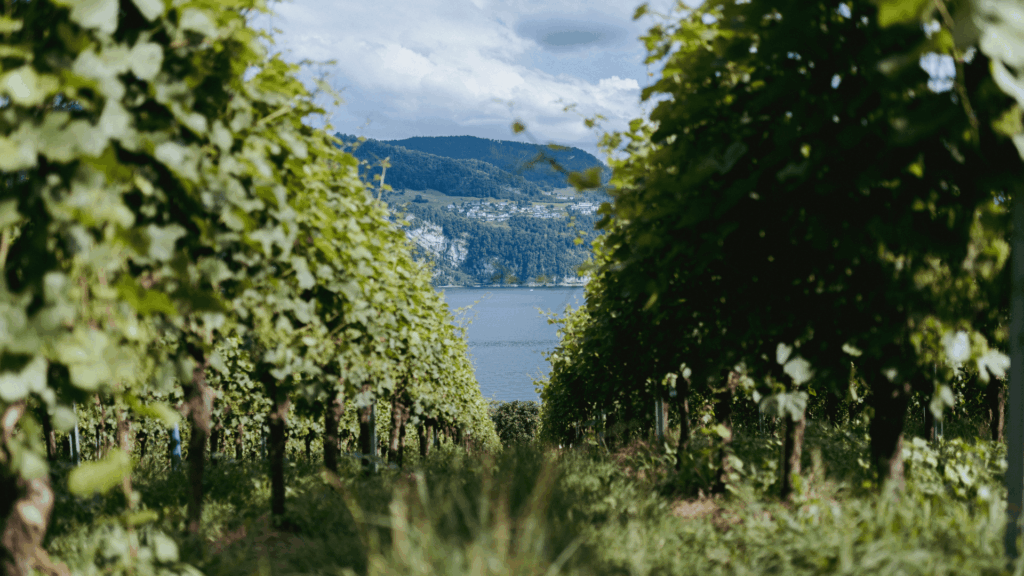
September brings excitement to Swiss wine country. The mornings become cooler, the vineyard leaves begin trading green for gold, and rows of plump grapes wait patiently for their big moment. After an entire year of pruning, tending, protecting and watching the vines, winegrowers are finally ready to gather the fruit of their labor, literally.
This is the vendange, Weinlese or vendemmia, depending on where in Switzerland you happen to be. Harvest is a carefully timed, fast-moving and important operation; decisions made over a few busy days can shape a wine’s freshness, aromas, structure and personality for years to come.
When Is a Grape Ready to Harvest?
The timing changes from region to region, vineyard to vineyard and even grape variety to grape variety. Harvest generally begins in late summer and continues through autumn. The weeks from August into September are especially important because berries are developing flavor while their sugar levels rise and their acidity gradually falls.
Picking too early may produce grapes with sharp acidity, underdeveloped flavors and insufficient sugar. Waiting too long can lead to excessive sugar, higher potential alcohol and a loss of freshness or finesse. The goal is not simply to find the sweetest grape it is to capture the right balance of sugar, acidity, aroma and physiological ripeness for the style of wine the producer hopes to make. Winegrowers take on the roles of farmer, scientist and professional grape snacker during harvest. They may:
- Measure grape sugar with a refractometer.
- Analyze acidity and pH in the cellar.
- Taste berries from different sections of the vineyard.
- Examine the skins, pulp and seeds.
- Watch the weather forecast very, very closely.
- Consider the desired wine style.

A sparkling wine producer may pick earlier to preserve bright acidity. Grapes intended for a fuller, richer wine may remain on the vine longer. Different parcels can therefore be harvested on different days even when they belong to the same estate.

The Great Swiss Grape Dash
Once the decision is made, everything moves quickly.
Harvest teams head into the vineyard with small pruning shears, buckets and crates. Grape clusters are clipped carefully from the vines and inspected for quality. Damaged, underripe or unhealthy berries are removed before the fruit continues its journey.
Much of Switzerland’s harvest work is done by hand, particularly in steep, narrow or terraced vineyards where large machines cannot easily operate. Manual harvesting also allows workers to select grapes carefully while they are still among the vines. In flatter vineyards, mechanical harvesters may be used to gather fruit efficiently, followed by sorting at the winery.
Hand-harvesting sounds romantic but it is also demanding. Imagine walking up and down sloping vineyards while repeatedly bending, clipping, lifting and carrying. Add a little autumn sun, a race against incoming rain and the occasional rogue grape rolling away, and you have one of the busiest workouts in the wine world.
The reward is an atmosphere that feels almost festive. Families, seasonal workers, friends and winery teams often work side by side. Buckets fill, crates travel toward the cellar and the vineyard slowly becomes lighter as its grapes begin their next chapter.

From Vineyard Celebrity to Cellar Squish
Freshly harvested grapes need to reach the cellar promptly and in good condition. Once they arrive, the winemaking team begins another round of sorting. Then comes the transformation:
1. De-stemming and crushing
Many grapes are separated from their stems before being gently crushed. Crushing breaks the skins and releases juice without pulverizing the seeds. The resulting mixture of juice, pulp, skins and seeds is known as the must or, in some contexts, the mash.
2. Pressing
For many white wines, grapes are pressed relatively early so that the clear juice can be separated from the skins. This helps preserve a pale color and delicate, fresh character. Red wine usually follows a different path. Because most red grape juice is light in color, it spends time fermenting with the dark skins. This contact allows the juice to collect color, flavor and tannin before or during pressing. Rosé receives a shorter visit with the skins just enough contact to pick up its pink hue.
3. Clarification
Before fermentation, white grape juice may be allowed to settle so that pieces of pulp, skin and other solids can be removed. The goal is not to erase personality, but to create the right environment for a clean and controlled fermentation.
4. Fermentation
This is where grape juice officially begins becoming wine. Yeast consumes the natural sugar in the juice and produces alcohol, carbon dioxide and heat. Depending on the wine, fermentation may last from several days to several weeks. Some producers add selected yeast strains, while others allow naturally occurring yeasts to begin the process. Throughout fermentation, the cellar team monitors temperature, aromas, density and the wine’s overall progress. The cellar may smell fruity, floral, yeasty and slightly fizzy during this period. Tanks bubble. Barrels gurgle.

The Softening Act
After alcoholic fermentation, many red wines, and some white wines, undergo malolactic fermentation. Despite its name, this is driven by bacteria rather than yeast. During the process, sharper malic acid is converted into softer lactic acid. This can make a wine feel rounder and smoother, reducing the sensation of tartness. It is especially common in red-wine production, although winemakers may encourage, limit or prevent it depending on the style they want to create.
Afterward, the wine may rest in stainless-steel tanks, large wooden vessels, traditional barrels or smaller barriques. Stainless steel tends to preserve pure fruit and freshness, while wood can contribute texture, gentle oxygen exposure and notes such as spice, toast or vanilla.
Harvest may be the dramatic season finale in the vineyard, but in the cellar, the story is only beginning.
What Does Harvest Mean for the Wine in Your Glass?
Every bottle of wine begins with hundreds of small decisions:
- Which parcel should be picked first?
- Is rain coming?
- Are the seeds ripe?
- Should the grapes be pressed immediately?
- How much skin contact will give the right color?
- Should the wine ferment in steel, wood or another vessel?
Harvest brings all those choices together. It also reminds us that wine is fundamentally agricultural. Before the elegant label, the polished glass and the carefully arranged cheese board, there is weather. There is soil. There are tired hands, stained boots and crates filled one cluster at a time. The next time you open a bottle of Swiss wine, take a moment to imagine its harvest day. Picture a cool September morning, sunlight reaching over the mountains, grapes glowing beneath their leaves and a winegrower deciding that today, finally, is the day.

A Small Country With a Very Big Wine Personality
Switzerland’s vineyards may be compact, but they contain an astonishing amount of diversity. More than 2,500 winegrowers cultivate approximately 14,569 hectares of vines across six official wine regions: Valais, Vaud, German-speaking Switzerland, Geneva, Ticino and Three Lakes. Together these regions stretch from sunny Alpine terraces to gentle lakeside slopes and Italian-influenced vineyards south of the Alps.
The country grows around 252 different grape varieties, even though Switzerland represents only about 0.2% of the world’s wine-growing area. Pinot Noir, Chasselas, Gamay and Merlot are the four most widely planted grapes, accounting for roughly two-thirds of the national vineyard surface. Alongside them are distinctive Swiss treasures such as Petite Arvine, Cornalin, Amigne, Räuschling, Completer, Gamaret and Garanoir. In other words, Swiss wine may come from a tiny corner of the globe, but it contains a whole library of flavors.
A Harvest Tour Around Switzerland
One of the joys of Swiss wine is that harvest looks—and tastes—a little different in every region.
Valais: Dramatic Alpine terraces and dry, sunny conditions create a remarkable home for both international and indigenous grapes. Petite Arvine can offer citrus, mineral and gently saline sensations, while Cornalin produces expressive, fruit-filled reds. Valais contains almost one-third of Switzerland’s vineyard area.


Vaud: Chasselas is the star of many vineyards stretching from Lake Geneva toward Lake Neuchâtel. Its subtle character can beautifully express differences in soil, slope and village. Harvesting the region’s steep or terraced vineyards often requires nimble feet and plenty of handwork.
Geneva: Positioned where the Jura and the Alps meet, Geneva combines countryside vineyards with the energy of a cosmopolitan city. It is Switzerland’s third-largest wine-producing area and grows an especially varied collection of grapes.
German-speaking Switzerland: Sixteen cantons form this broad region, where Pinot Noir and Müller-Thurgau are particularly important. From Graubünden to Zurich, Schaffhausen, Thurgau and beyond, harvest reflects an impressive variety of landscapes and local traditions.
Ticino: Cross the Alps and Merlot takes center stage. More than 80% of Ticino’s vineyard area is planted with the variety, which can be transformed into everything from fresh, elegant reds to fuller barrel-aged wines and even white Merlot.


Three Lakes: Lake Neuchâtel, Lake Biel and Lake Murten form this multilingual region of lakeside vineyards. Pinot Noir Chasselas and Oeil de Perdrix are important here, and the area is known for distinctive regional traditions and styles. Six regions, hundreds of grapes and approximately one million opportunities to say, “I had no idea Switzerland made that!”
Interested in Tasting Swiss Wines?
Are you ready to discover hand-crafted wines with us? Prost Membership gives you access to purchase rarely exported, biodynamic wines at an affordable price. Learn more about our membership by contacting us today.